Edexcel A Level Chemistry:復習筆記2.3.1 Group 7 Trends
Physical Properties The Group 7 elements are called?halogens The halogens have uses in water purification and as bleaching agents (chlorine), as flame-retardants and fire extinguishers (brom...
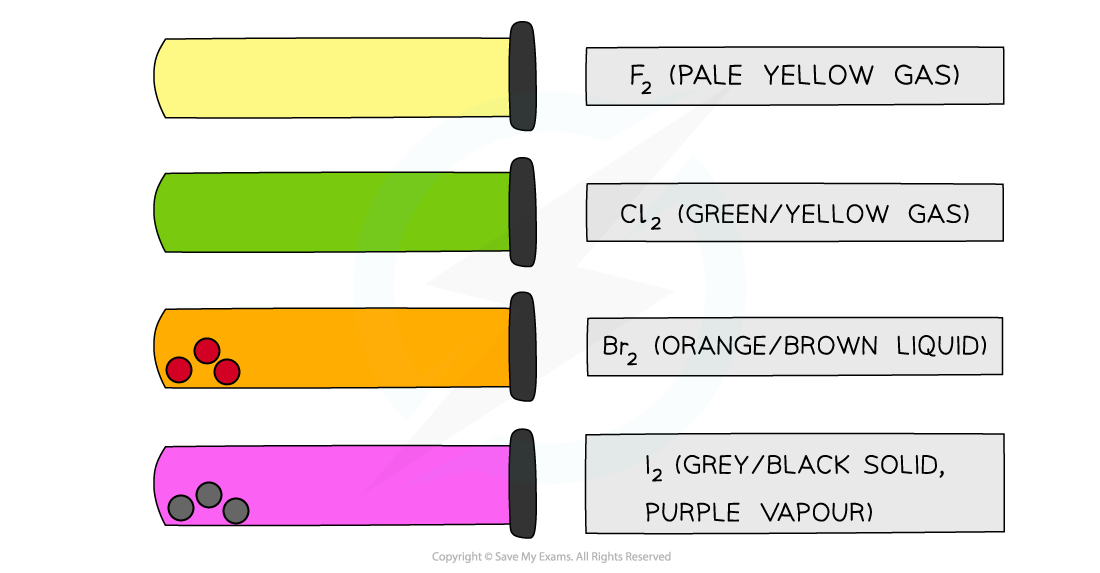
Physical Properties The Group 7 elements are called?halogens The halogens have uses in water purification and as bleaching agents (chlorine), as flame-retardants and fire extinguishers (brom...
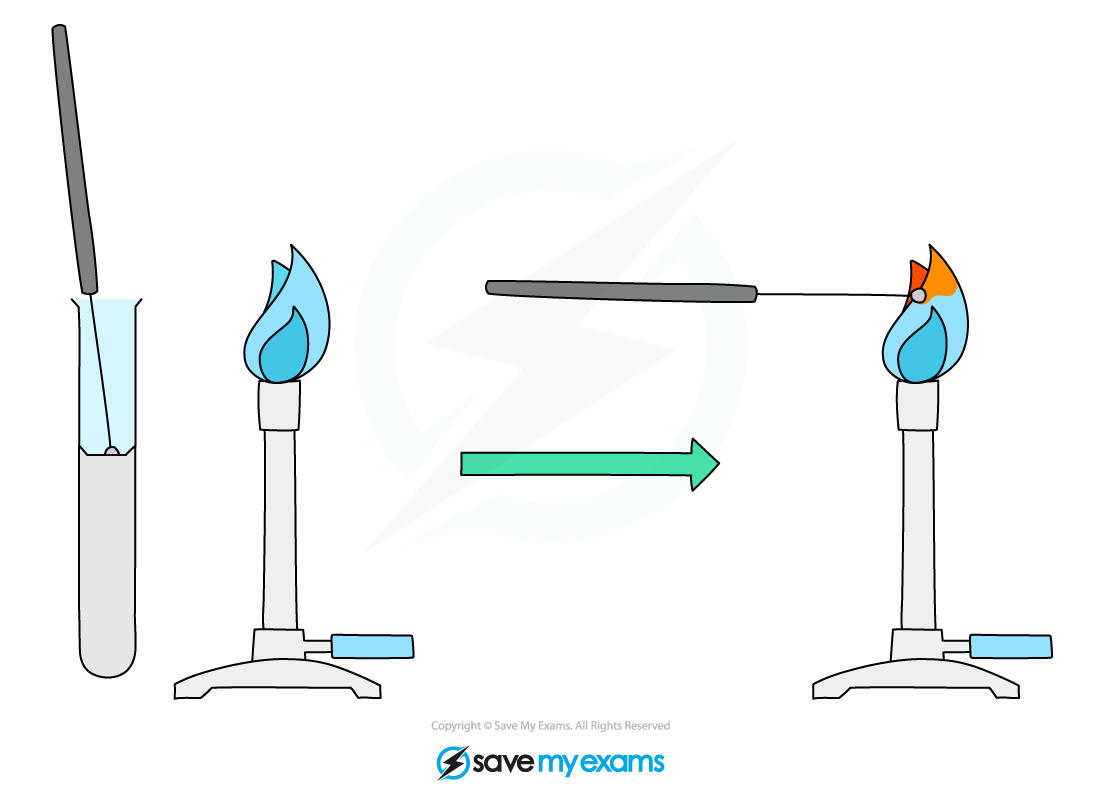
Flame Tests Metal ions produce a?colour?if heated strongly in a flame Ions from?different?metals produce?different?colours The flame test is thus used to identify metal ions by the colour of...

Group 2 Carbonates & Nitrates Thermal decomposition?is the breakdown of a compound into two or more different substances using?heat Thermal decomposition of carbonates The Group 2 carbon...
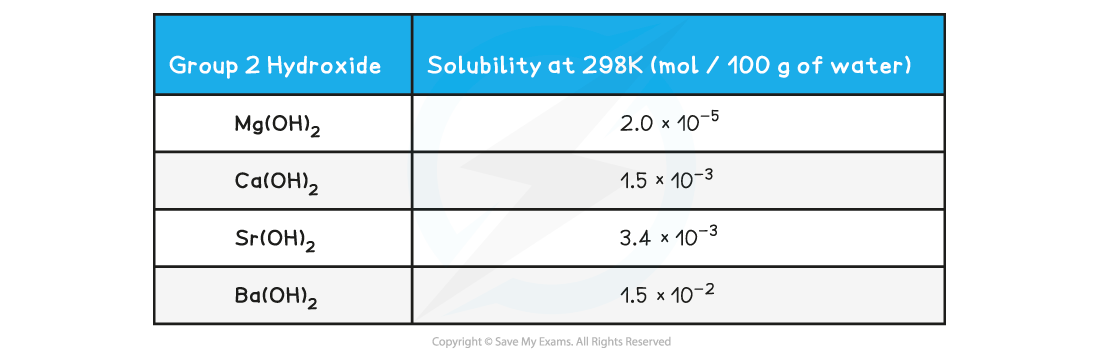
Group 2 Hydroxides & Sulfates Group 2 hydroxides Going down the group, the solutions formed from the reaction of Group 2 oxides with water become more?alkaline When the oxides are dissol...
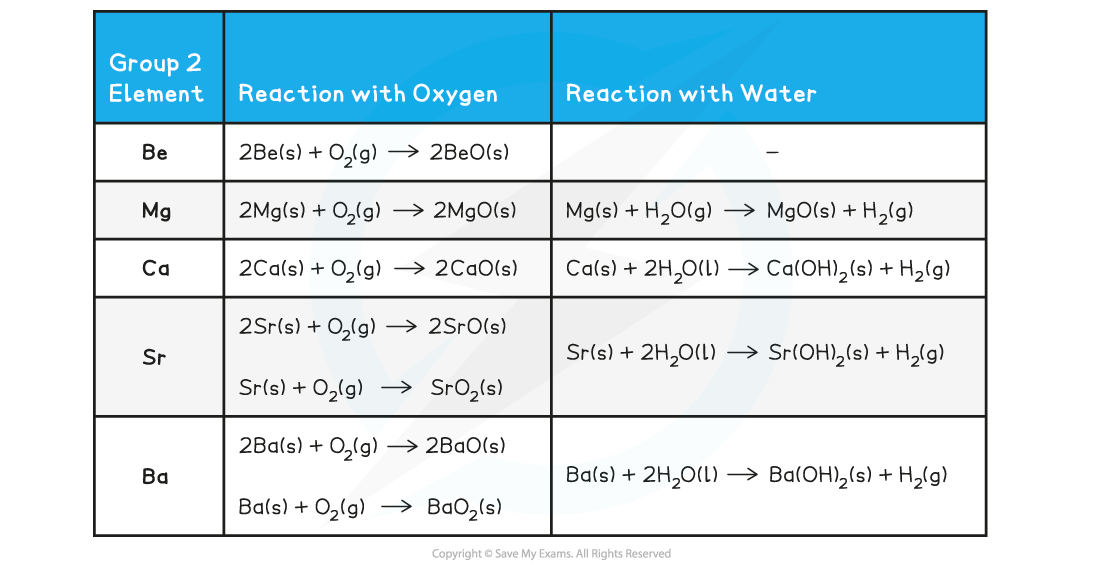
Group 2 Elements Reactions with water and oxygen The reaction of group 2 metals with oxygen follows the following general equation: 2M (s) + O2?(g) → 2MO (s) Where M is any metal in group 2 ...
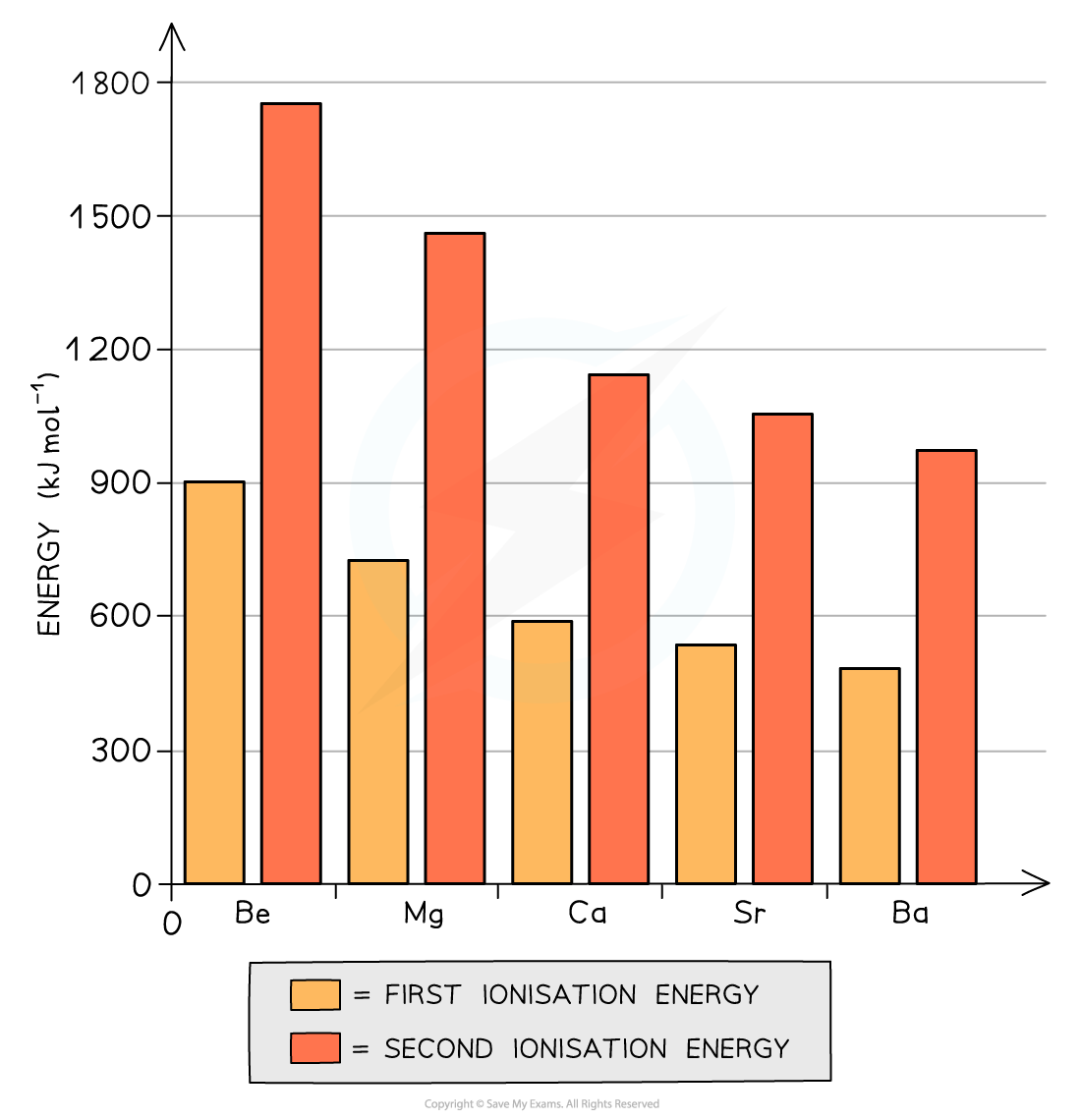
Ionisation Energy Chemical trends All elements in Group 2 (also called?alkali earth metals)?have two electrons in their?outermost principal quantum shell All Group 2 metals can form?ionic?co...

Writing Chemical Formulae Oxidation numbers are a useful tool for naming compounds as some elements can exist with more than one oxidation number For compound with two elements it is straigh...
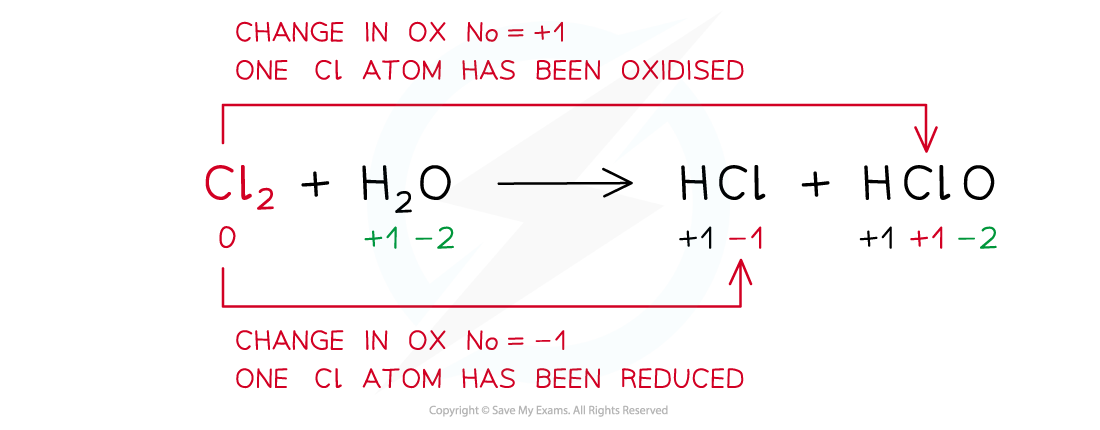
Disproportionation Disproportionation reactions A?disproportionation?reaction?is a reaction in which the same species is simultaneously oxidised and reduced Example of a disproportion reacti...

Electron Transfer & Change in Oxidation Number Oxidation and reduction in a reaction can be demonstrated in terms of electron transfer For example: 2NH3?+ 3Br2?→ N2?+ 6HBr The oxidation ...





