全球科學攝影展評SPC中國區一等獎作品展示!

 全球科學攝影展評
用科學與藝術的眼光探索世界的奧秘
 感謝大家參與2021年全球科學攝影展評 (MILSET STEAM PHOTO CONTEST)。
此次展評同學們都取得了極為優異的成績,中國區共有26名學生入圍全球獎項評選,且包攬全球前三名 。
本篇文章將公布全球獎、全國獎獲獎結果,并進行全國一等獎作品展示
全球科學攝影展評
MILSET STEAM PHOTO CONTEST
 主辦方:MILSET (The International Movement for Leisure Activities in Science and Technology) 國際青少年科學協會。MILSET是全球最大的青少年STEM非營利性學術活動平臺,旨在建立國際科學交流平臺,培養青年一代的“科學文化”,鼓勵他們突破地理和文化的限制,思考如何用科學共同解決我們的世界面臨的問題。MILSET的會員遍布 18 國家,主要會員是各國的青少年科學協會。每年,MILSET都會在全球舉辦超過30項STEM科學活動,并開放給會員國的青少年,旨在促進不同國家的青少年之間的溝通。其中規模最大的是全球青年科學論壇,全球科學攝影展評,青年科學圓桌會議。
獎項設置
全球獎項
全球前三名 Global Top 3
中國區獎項
? 一等獎 High Distinction:前 10%
? 二等獎 Distinction:前 20%
? 三等獎 Credit:前 35%
(* 全球前十名的作品將在 MILSET 官網進行展示,展示地址:https://spc-virtual.milset.org/2021/)
結果公布
全球前三名 Global Top 3
 *注:全球組委會將發送獲獎詳情郵件給三位全球獎獲獎者,請同學們注意查收郵件!
 全國一等獎 High Distinction
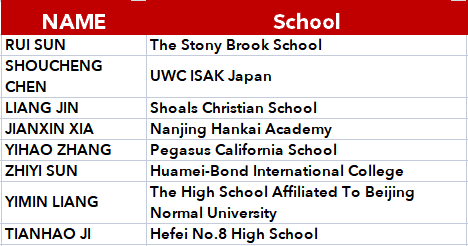 *注:此名單排名不分先后
全國二等獎 Distinction
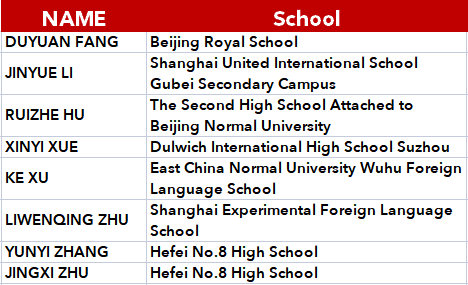 *注:此名單排名不分先后
全國三等獎 Credit
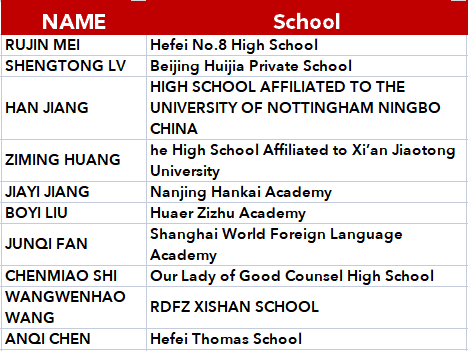 *注:此名單排名不分先后
此活動僅提供電子版獲獎證書,未獲獎者僅提供電子版參與證書
2021年獲獎作品展示
*以下作品展示不分先后順序
全國一等獎作品展示
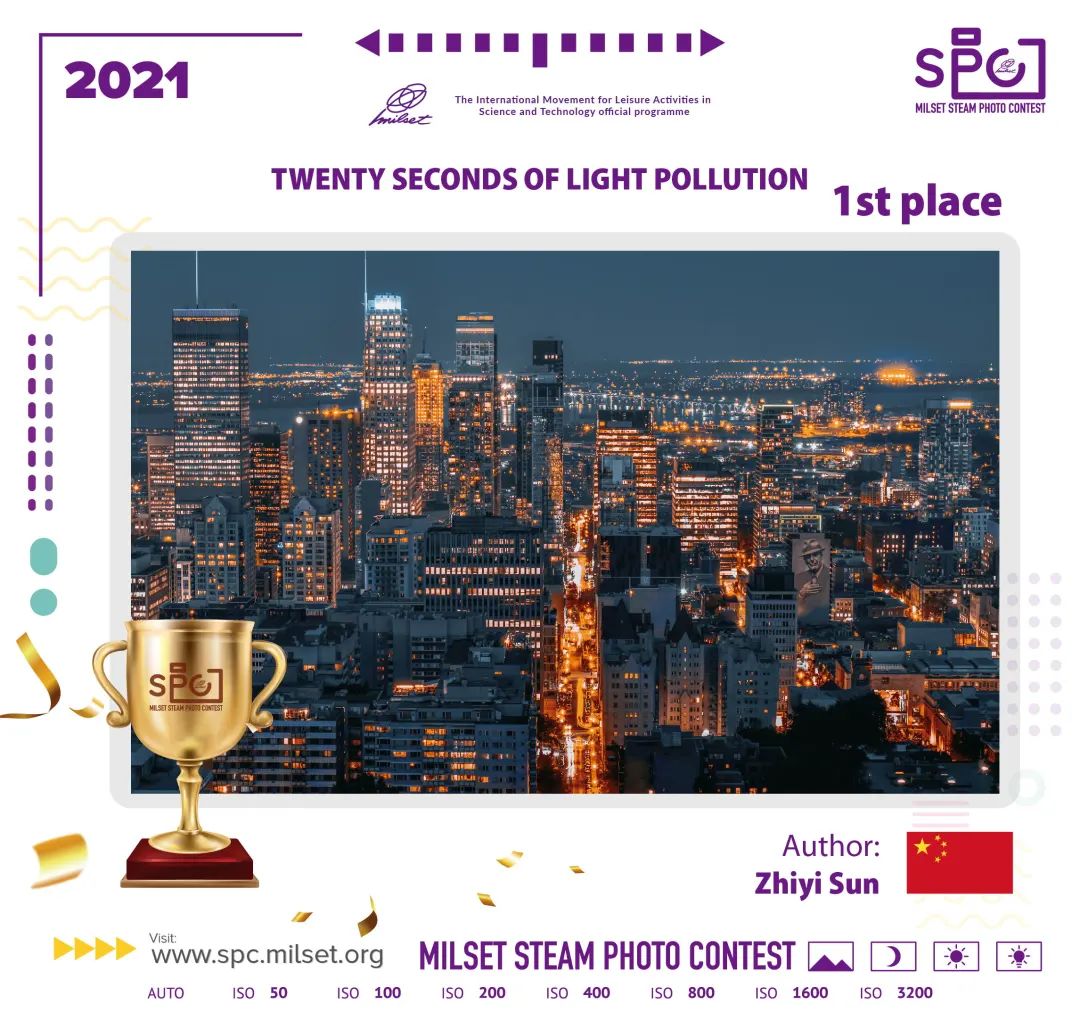
 Author: ZHIYI SUN
School: Huamei-Bond International College
Title:?Twenty Seconds of Light pollution
Description:?This photo recorded the light pollution in downtown Montreal at night for a short time with a shutter speed of twenty seconds. The content of the photo contains two parts: buildings, and lighting. For buildings, only blue-gray tones are retained. And the bright orange is used in the lighting part to form a sharp contrast with the blue-gray buildings, thus highlighting the light pollution of the city. Light pollution is excessive, misdirected, or inappropriate outdoor lighting. Too much light pollution washes out the view of the Universe, increasing energy consumption, interferes with astronomical research, disrupts ecosystems, and affects the health and safety of humans and wildlife. Light pollution can have as great an impact on the planet as levels of carbon monoxide and other airborne pollutants. The theme of this photo is to use the strong visual impact, which is brought by the contrast of bright orange tones of lighting and blue-grey tones of buildings in the photo, to warn people to pay more attention to light pollution and to call on people to reduce light pollution.
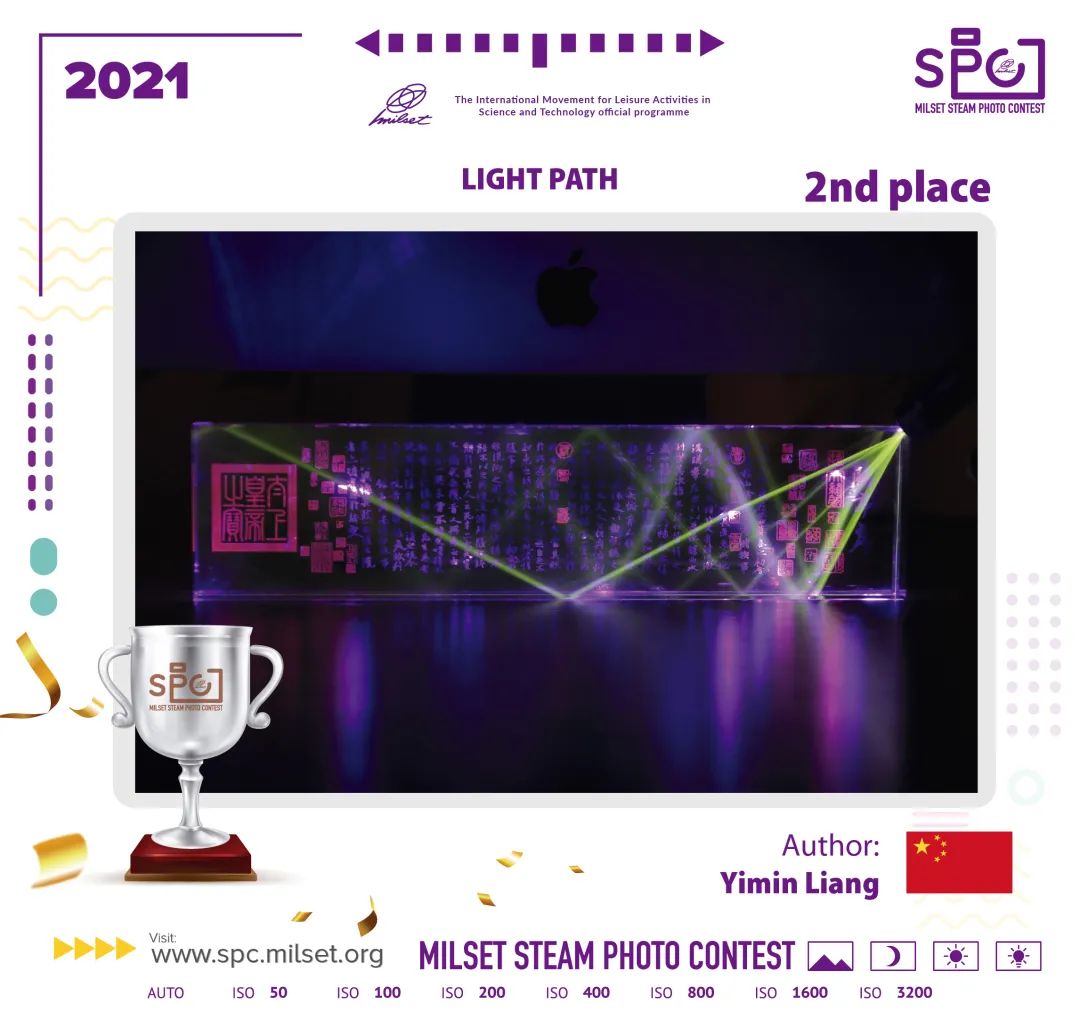
 Author: YIMIN LIANG
School:?The High School Affiliated To Beijing Normal University
Title:?Light Path
Description:?This picture clearly shows the path of light reflected. Because the edges of the glass have been cut into multiple bevels, light coming in from the edges will be reflected at multiple angles.
The transmittance of glass is limited, so there only part of the light can get through it. Therefore, we can see that light had been reflected back when it irradiated to the surface of the transparent glass. but at the same time, there are still some lights can go through it, so the brightness of the reflected light was reduced, and the light internal reflection in the glass makes it looks like had been light up.
At the same time, the rough surface of the table diffuses the light, reflecting parallel incoming light in many different directions, so the reflection looks blurry.
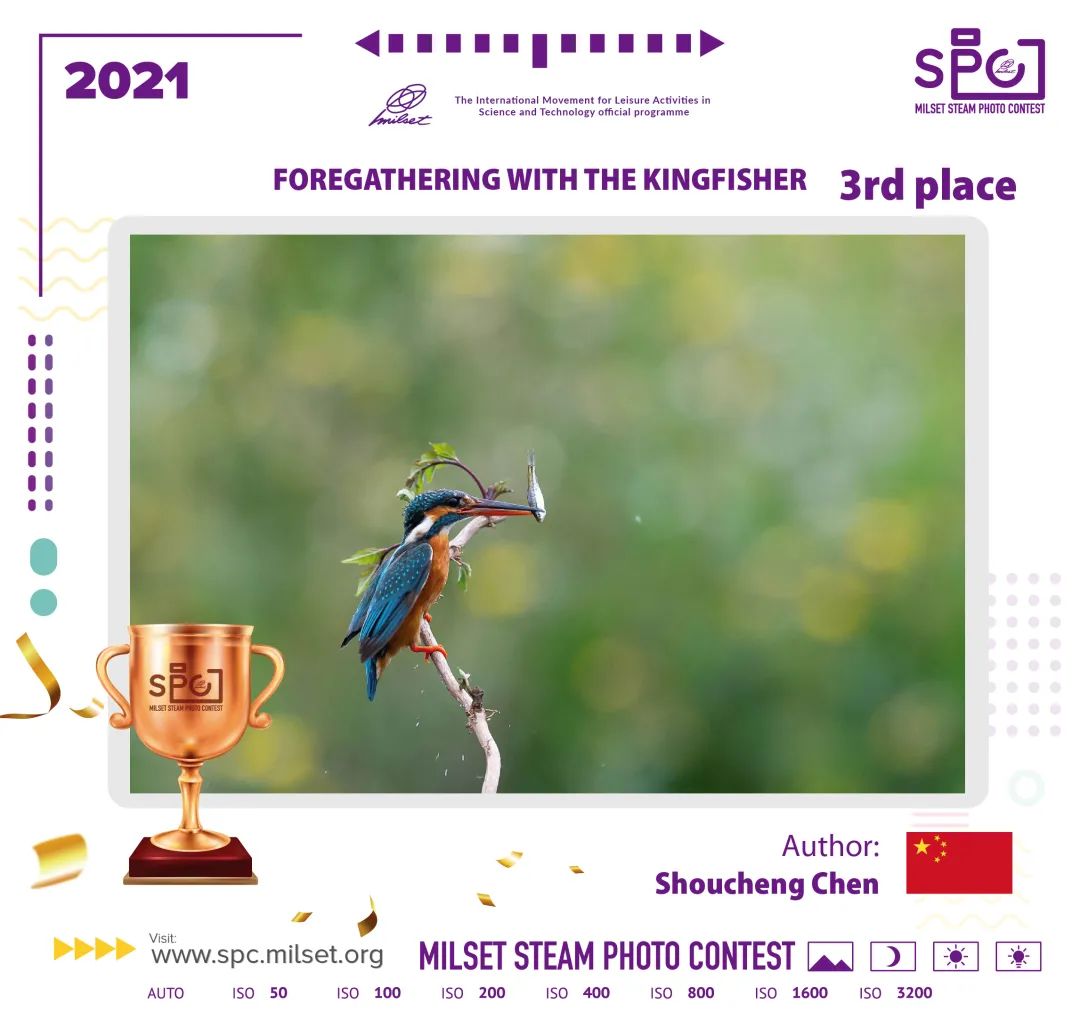
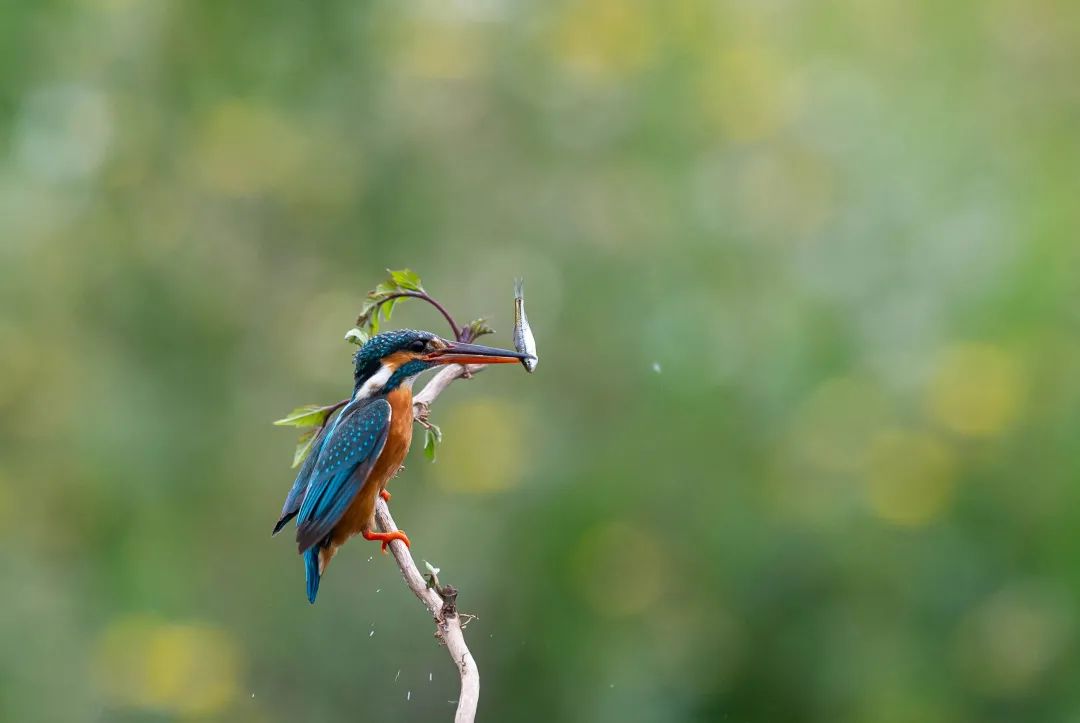 Author:?SHOUCHENG CHEN
School:?UWC ISAK Japan
Title:?Foregathering With The Kingfisher
Description:?Foregathering With The Kingfisher is a photo representing a beautiful Kingfisher picking up a small fish in its sharp beak. The photo shows the food chains between animals and how our mother Earth conducting our environemnt in a scientific manner.
The weight of the fish that a kingfisher eats every day accounts for about 60% of its body weight. They will squat for a long time in a place with a good view of the water (such as a sticking branch, a protruding lotus, or a protruding stone platform on the shore). Once they see the prey, they will rush out like an arrow from the string. Entering the water, grabbing the fish, exiting the water, and flying back to the resting place are almost completed in an instant. After entering the water, the kingfisher can maintain excellent vision, because his eyes can quickly adjust the viewing angle contrast caused by the light in the water after entering the water. Of course, even with such a quick fish catching action, the success rate is not 100%.
Yet the Kingfisher is a endangered animal speice, the photo could also be a really good publication to show people the beauty of Kingfisher and rise public's awareness towards the Kingfisher.? Author:?JIANXIN XIA
School:?Nanjing Hankai Academy
Title:?Plsma Ball
Description:?The plasma ball is made of glass and is filled with noble gas. The ball has a black spherical electrode in the center. After powering-up, the noble gas becomes ionized and undergoes q1energy-level transition, which produces the dazzling light.
 Author: TIANHAO JI
School:?Hefei No.8 High School
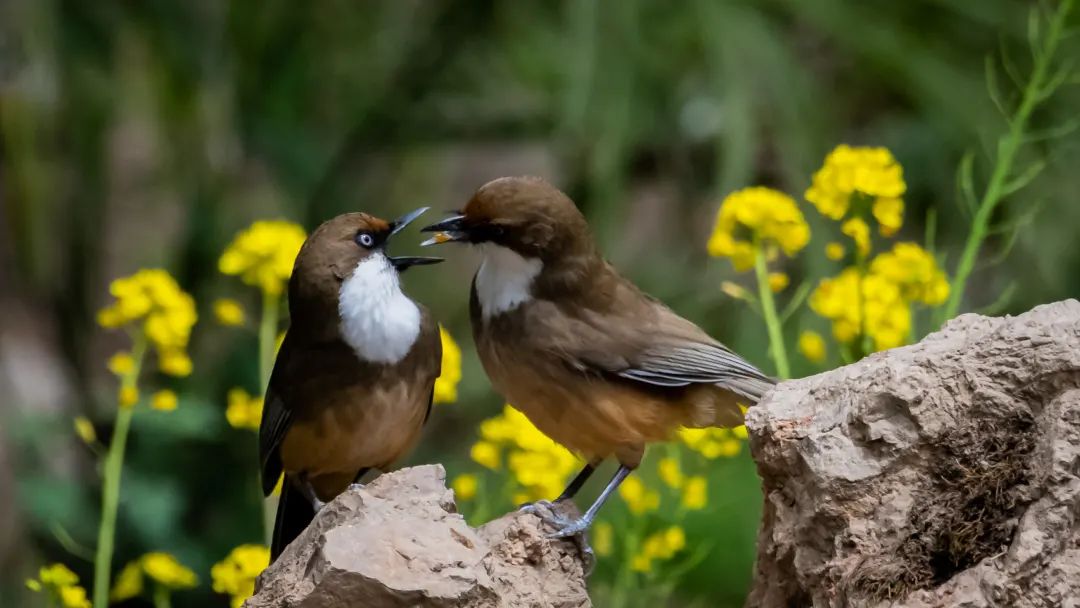
Title:?Share
Description:?The birds in the photo are called Garrulax albogularis. Here, a Garrulax Albogularis shares food, which I think is to save the female energy to lay eggs. The male has found food for her.
These birds are usually in small groups of 5 to more than 10 individuals. They mainly live on the ground and forage under the forest or in the shrubs. The breeding period of Garrulax albogularis is from May to July. Nests are in the mountain forest, placed in the undergrowth of the bush or on the branches of the small tree. Their nest just like a cup, built by the grass stem, grass leaves, grass roots and other materials, the pad has a fine grass stem and fibrous roots. There are mostly 3 to 4 eggs in each brood. The eggs are dark blue and oval in shape. The size of these eggs is 29 mm ×21 mm.
The Garrulax albogularis are small, only about 28cm long. They are brown on the top of their heads and sepia on their upper bodies. With conspicuous white hairs on their throats and tail feathers, they are swaggering and easy to spot in the wild.
These Garrulax albogularis are mainly found in various forests and bamboo groves in the low mountains, hills and foothices at an altitude of about 1,000 meters. They mainly feed on insects and are known as "noisy tits" in Sichuan because of their unique calls.
 Author: RUI SUN
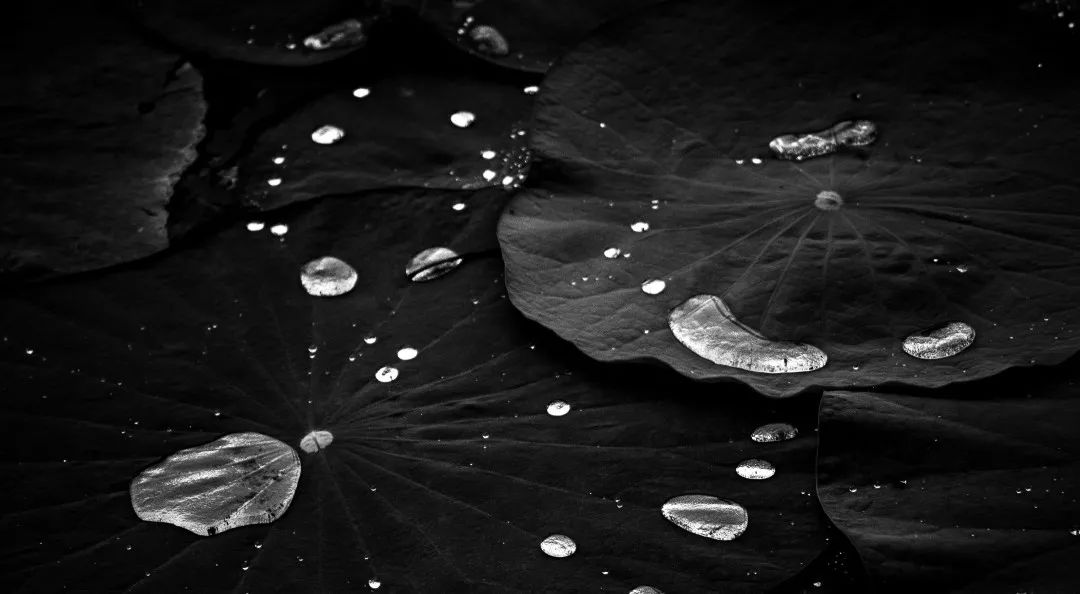
School:?The Stony Brook School
Title:?Crystal Inlay
Description: From a distance, it seems to be a Mosaic of crystals, but closer, it is the common drops of water on the lotus leaf. The water does not spread out entirely on the leaf, keeping with nature’s “energy-saving” principle that it takes the least amount of energy to keep water in contact with lotus leaves. The rough surface structure of the lotus leaf can trap a large amount of air between the water and the lotus leaf, reducing the contact surface between the two, and the smaller the contact area, the more hydrophobic the leaves are. Moreover, The two material interfaces are so different that repel each other. Therefore the water drops that do not spread on the leaf under the sunlight provide us with an artful phenomenon like crystal inlaid on the lotus leaves.
 Author: YIHAO ZHANG
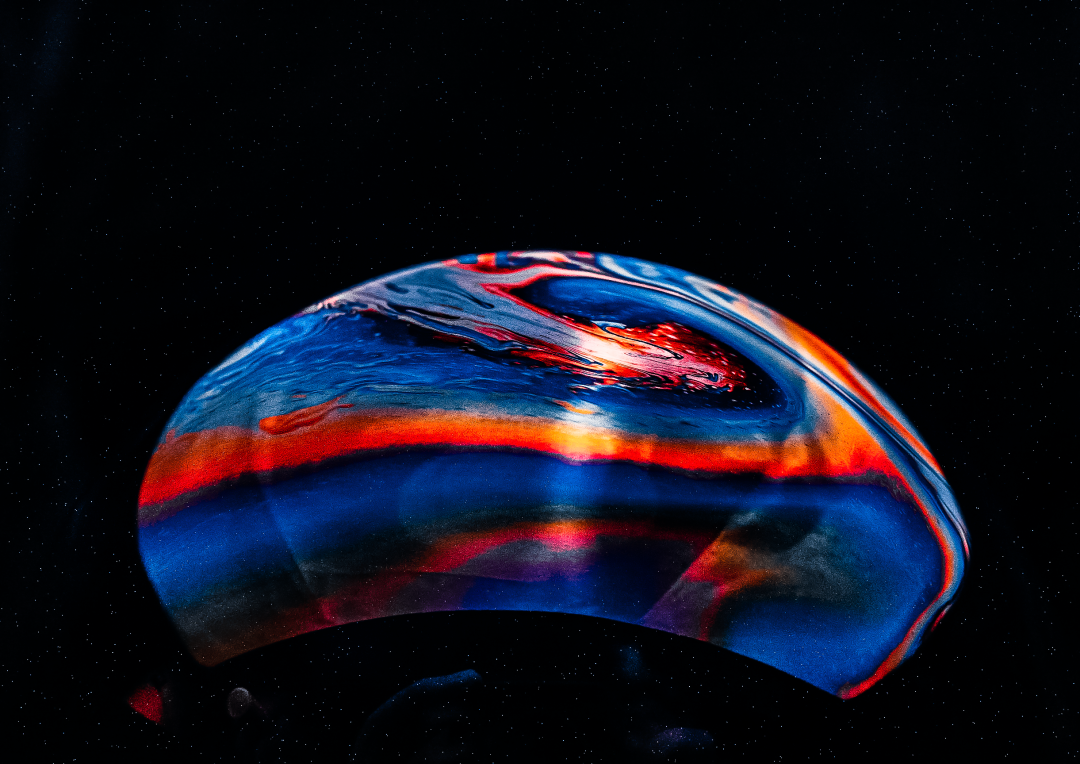
School:?Pegasus California School
Title:?Cosmic Bubble
Description:?The bubble (film) slowly becomes thinner and thicker due to gravity, and Thin-film interference occurs between the light from the inside and the outside of the film. Part of the light superimposed on each other and brighter, part of each other to cancel and becomes darker, becomes colorful.
 Author: LIANG JIN
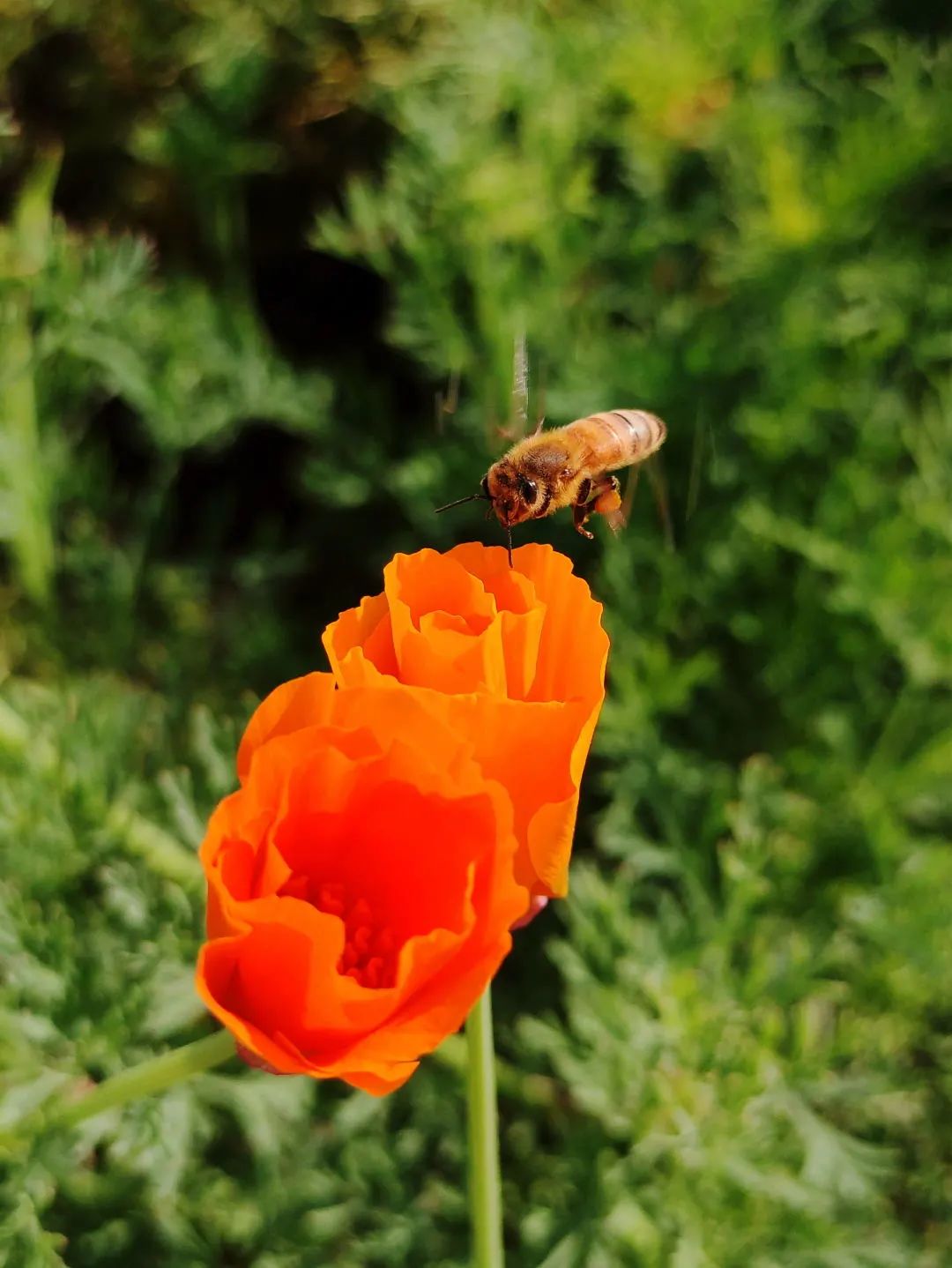
School:?Shoals Christian School
Title:?The Bee
Description:?The external bees will collect the nectar from flowers and give it to the internal bees. The internal bees will suck in and spit out the collected nectar, repeatedly, and by constantly stirring their wings and dancing their bodies, to evaporate the excess water in the nectar, reducing the water content from about 60% to 20% or less, and forming a high concentration of honey liquid. This is the physical function of bees in making honey.
As nectar becomes dense, bees secrete digestive enzymes such as sucrase, amylase, and other invertases. These digestive enzymes convert the sucrose contained in the nectar into glucose and fructose. ?honey is the only naturally occurring simple sugar. At the same time, during the transformation process, more active substances will be added to provide more abundant nutrients for honey. This is the chemical process that bees use to make honey.
When the nectar has undergone both chemical and physical effects, the bees will put the nectar into the nest, and seal it with wax. It usually takes 7-15 days for the nectar to ferment before it becomes mature honey.
如果你對全球科學攝影展評SPC感興趣
快來掃碼添加翰林顧問老師
了解賽事信息和培養輔導計劃吧!


翰林AMC8視頻課重磅上線!

國際競賽真題資源免費領取







