備考AP宏觀經濟,這樣可以得5分

今天由CC告訴我們
關于AP宏觀經濟學的備考心得
你準備好接收了么?哈哈哈~
A.?? Basic Concept.
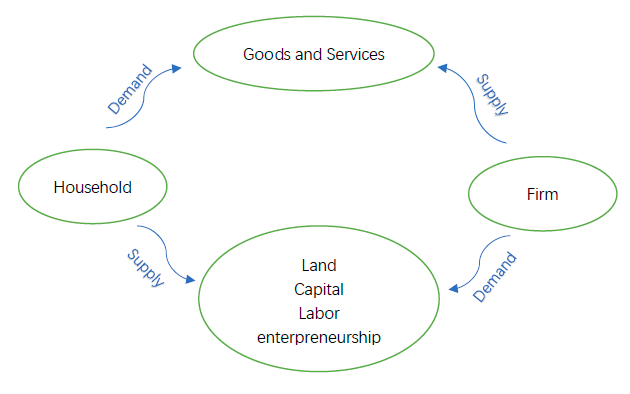
1.Relationship between household and film
2.General Domestic Product(GDP)
幾點需要注意:1: It represent the final market value.
2: All services and goods in the market.
3: in only one country.
4: in a period of time (a year)
不能算作GDP的情況,如:1900年的古董今年再售賣,只能算1900年的GDP不能算是2018年的。(因為古董是在1900年生產的)
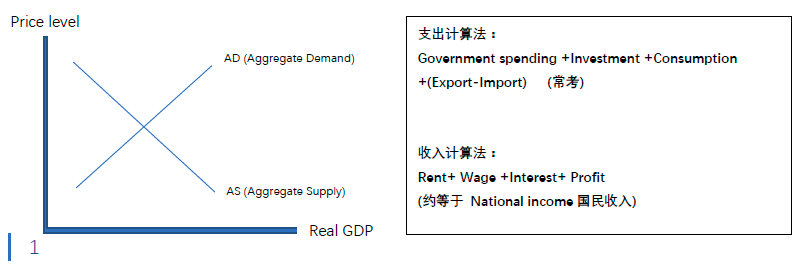
3.? Nominal GDP=current price * current quantity
Real GDP=base year price * current quantity
4. Price index (價格指數)
Consumer price index (消費者價格指數): measureschanges in the price level of a market basket of consumer goods and services purchased by households.
(Overestimate the true burden of inflation because it does not recognize consumers’ ability to substitute goods and services as price change. (選擇題考過))
Producer price index(生產者價格指數):the average changes in prices received by domestic producers for their output.
5.?? GDP deflator=(Nominal GDP/Real GDP)*100
RGDP>NGDP : Deflation
RGDP<NGDP : Inflation
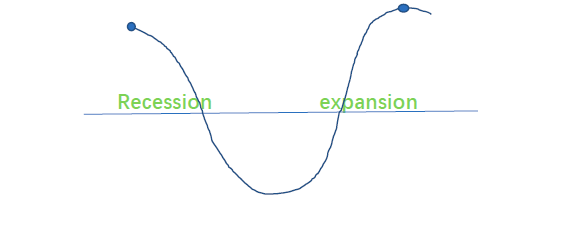
6.Business Cycle(選擇題考過)
7.?? Main Reasons for economic growth(常考,幾乎選擇題必考):
- More resources
- Higher level of education
- Increase technology / productivity
Methods to improve Human Capital:
- Education/Training
- Better skills
8.?? Disposable income=personal income-tax
9.? Consumption=autonomous consumption + derived consumption
autonomous consumption: consumption expenditure that occurs when income levels are zero.
derived consumption:Consumption for a factor of production or intermediate good occurs as a result of the consumption for another intermediate or final good.
10.Nominal interest rate-Inflation=Real interest rate(常考)
B.?? Three main theory:
(1)?Monetarist(很少考):increasing the money supply at a rate equal to the GDP increase rate.
(2)? Classical(比較常考,答題也有出,關鍵詞:Government take no actions): emphasize economy is fairly stable(強調市場內在穩定),can cure the recession; and no government intervention(沒有政府介入); Flexible market.
(3)?Keynesians(常考):emphasize that economy is unstable. (Sticky market);Recommand active government policy.(fiscal policy is more effective than monetary policy);Liquidity trap
| Example for classical theory: |
When economy is in Recession ,there is surplus of workers or inputs ,the wage and the cost will decrease
AS curve will shift to right for get equilibrium level.(沒有政府介入,市場自動恢復)
C.Crowding out and Stagflation(常考)
Crowding out effect :通常指政府的開支增加導致的私人投資和消費減少。
通常思路是:GS(government spending)increase???? Demand for loanable fund increase??? real interest rate increase??? people tend to save money in the banks rather than use it to invest, so that investment and consumption decrease, AD shift to left.反之亦然。
Stagflation:跟理性預期很像。
邏輯是:When AD curve shift to right ,price level increase
people are expecting for a higher price level
so that producers tend to save products rather than sell it since they are waiting for a higher price level which can make more profit for them.
D.? Unemployment(選擇題必考)
1.??? 計算方法:失業人口/總勞動力
失業人口指:
1.People have ability to work but do not have job.
2.People who is finding new job.
不是失業人口的情況:Tony在一個志愿者中心無薪工作,期間拒絕一切工作的offer,這種情況Tony不能算是勞動力。
2.??? FOUR kinds of unemployment;
(1)??? Frictional unemployment:摩擦性失業,A person switch to a new job.可以理解為跳槽期間的空檔時間。
(2)??? Structural unemployment:結構性失業, A kind of skill is being replaced by machines, therefore there is no requirement for this kind of skill-worker anymore.(技術不再被市場需求)
(3)??? Cyclical unemployment:周期性事業, A person was being unemployed since the economic change, such as recession or depression.
(4)??? Seasonal unemployment:季節性失業,A person was unemployed since the seasonal change.
3.? Dishonest workers: 不是失業人口卻拿補助金的人。會導致unemployment rate 上升。
4.? Natural unemployment rate:around 5%, only in structural unemployment and frictional unemployment.
5.? Discourage workers: People who do not want to find job, and will not account in labor force.
E.??? Multiplier
1.? MPC:Marginal propensity to consume(邊際消費傾向)
MPS:Marginal propensity to save
MPC=change in consumption/change in income
MPS+MPC=1
2.??? Government spending multiplier: GS*(1/1-MPC) OR GS*(1/MPS)
3.??? Balanced Budget: (1/1-MPC)*(-MPC/1-MPC)=1
(常考考點:政府開支和稅同時增加相同的量,他們的乘數效應一樣嗎?答案是!不一樣,因為政府開支的乘數比稅的乘數大。)
F. Monetary Policy
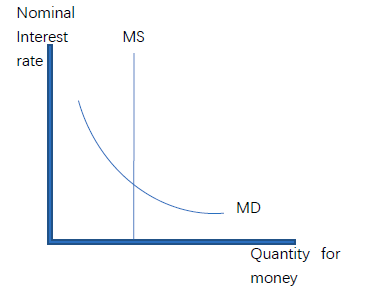
1.最最最常考,必須記住的:導致Money Supply增加的三個原因:
- Required reserve rate decrease
- discount rate decrease
- Central bank buy goverment bonds (這個相比前面對nominal interest rate影響最小)
反過來,導致MS 減少的三個原因:
- Required reserve rate increase
- Discount rate increase
- Central bank sell goverment bonds
2.Federal funds rate: the interest rate of loan between commercial banks.
3. Discount rate: the interest rate that a country’s central bank charges to other banks.
4.股票價格=股息/利率
5.National debt: the accumulation of past and current budget deficits and surplus.
6. current account/financial account
Current account: services/goods/products/transfer
Financial account: shock/directly investment (factory) and indirectly investment/bonds
(如果其中一個deficit,另外一個就surplus)
7.Tax credit:稅收減免 (Real tax decrease, led to an increase in investment)
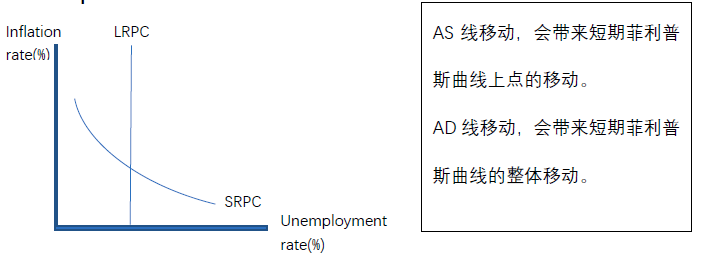
G.Phillips Curve
H. Exchange Market
重點:1.對一個國家貨幣需求上升,同時另一個國家的貨幣供給也會上升。
2.Interest rate increase???? Appreciation???? Export decrease and import increase
3.Interest rate decrease???? depreciation???? Import decrease and Export increase
4.Import traffic increase???? Import decrease???? Demand for foreign currency decrease and Supply for domestic currency decrease

謝謝大家看完我準備的所有資料
這是我花了一整天時間整理出來的必考考點
我是一名正在努力備考3門AP 的學生~~
跟你們一樣努力奮戰中
在最近幾次模考中都已經達到五分線啦,嘿嘿。

這是我兩個月學習加模考自己總結的考點(畫這里面的圖都畫了好久呢嗚嗚嗚),幾乎都是必考的,沒有記下來這些不可能拿五分哦 都是基本考點。
有幾個忠告想要告訴大家的是:
1.有三個圖形一定要記得,分別是:GDP,loanable market,還有Money Market的圖形。需要靈活使用。
2.關于大題,要拿五分大題一定要高分,最多錯1~2 個小問。第一題通常是GDP的題,需要看清楚是recession還是equilibrium還是Inflation的,這題最簡單,但是分值也最高,不能失分哦,不要忘記GDP圖的任何腳標
第二題通常是Money supply的題型,會告訴你法定準備金率是多少還有T賬戶,然后讓你進行各種計算(比如,excess reserve,reserve requirement, the maximum change in money supply等等),這種題型相對來說比較難,我覺得最有效的辦法是:連續做幾年這類型的大題,弄清它的考法,理解demand deposit,loan ,reserve requirement,excess reserve等等之間的關系,就可以啦。
第三題的話就有比較多的可能性,比如菲利普斯曲線,失業率,外匯市場。前兩個還比較好做題,外匯市場最主要是辨別貨幣是貶值或者升值,所帶來可能的影響是什么。
3. 關于選擇題,每個知識點都會涉及到,要拿五分然而大題又要有一點容錯的空間的話,60道選擇題必須控制在50題以上才可以。我認為選擇題一定要看清楚題目,然后多練習,錯的題一定要理解知識點,保證下次不會再錯。
好了,這就是我用時間堆積出來滿滿的知識點,非常希望可以幫到你,也一定有用,希望每一個努力備考的你們都能拿到好的成績!!!5!!!!!!!

咨詢或AP報名請添加顧問微信


翰林AMC8視頻課重磅上線!

國際競賽真題資源免費領取







